Wearables 2025 report card: How smartwatches, rings, and glasses performed this year against my predictions


Grades: Smart watches (B+), smart rings (C), smart glasses (A)
It’s been an amazing 2025 for wearables. Some trends were predictable, such as smart glasses continuing their dominant growth and smart watches adding more AI and health features. But I didn’t expect other things, like cases of Oura strangling his smart rivals or the cost effect.
Then, I’ll look at the biggest wearable and fitness watch brands and measure their performance in 2025 – where they’ve been successful and how they could do better.
Judging by my 2025 predictions for smartwatches, rings, and glasses
As expected, Garmin tested the “willingness of loyal users to buy smart watches for the value status brand.” The Garmin Fenix 8 Pro ($1.2–2K) and Venu X1 ($800) are obvious examples, but even mid-range monitors like the Venu 4 ($550) are already high-end.
Add in the $800 Apple Watch Ultra 3, $500 and $650 Galaxy Watches, and the $1,000 Polar Grit X2 Pro, and you can see brands normalizing phone-level prices (and reducing tax costs).
It was also expected that there would be “more options” for appreciative consumers. The Apple Watch SE 3 is worth it, sticking to its old price of $250, but it’s different. We’ve seen cheap trackers from Xiaomi and CMF, but very few cheap Android smartwatches aside from discounted last-generation models. Even Amazfit has sold many $300+ watches for $100.
Taxes interfere with budget options, making it more profitable to attract wealthy hobbyists.

Meanwhile, Google, Samsung, and Apple started pushing the system the idea of smartwatch AI in 2025. But it’s still very much on the phone for query processing and analysis of health data.
The Pixel Watch 4 and Apple Watch S11 have AI tools that watch as smart feedback or live translation, and I appreciate how the Gemini on Android watch syncs well with Google apps. I expect a big AI push in 2026, especially with the Fitbit Personal Health Coach AI.
Also, companies clearly search smart watches have become medical devices, but we are still in the “well-being” prediction phase. For example, Samsung has added virtual doctor visits and prescription management while offering its watches vascular health and antioxidant index analysis, with heart failure warnings coming soon.
That said, my analyst’s prediction of direct blood pressure monitoring in watches by 2025 didn’t happen. But Apple started offering hypertension warnings, while Fitbit and Oura introduced hypertension studies – so at least we’re getting warning signs with high blood pressure.
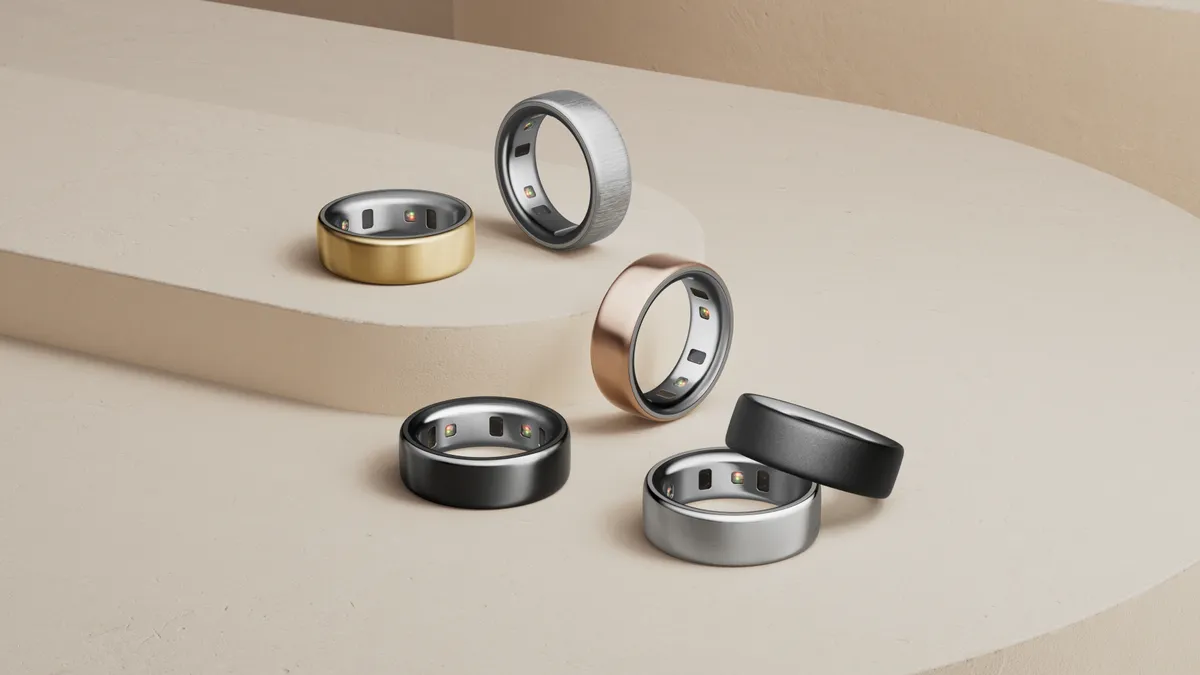
As for smart rings, I don’t have hard figures for 2025 yet, but the current estimates of IDC show that it’s stagnating but growing compared to fitness trackers, and growing much slower than smart glasses.
Selling be I’m older, but I expect the stage to stop. Oura has used its patents to demand royalties from all smart ring brands, bringing Circular and RingConn to heel, successfully banning Ultrahuman in the US, and currently challenging Samsung.
The current rumor is that Samsung will not make the Galaxy Ring 2, and there is little hope of competing with innovation in the space if brands like Fitbit and Apple decide that it is not worth the legal harassment – or giving Oura a cut of the profits – to make a smart ring.

Finally, IDC’s Jitesh Ubrani was pessimistic about the future of smart glasses last year, saying that “most consumers don’t need” the combination of photos/video/music/AI and that sales will only increase from 2.5 million to 3.5 million by 2025.
Turns out, IDC’s current forecast is 9.4 million glasses sold by 2025, Ray-Ban/Oakley’s Meta partner EssilorLuxottica has increased production to 10 million a year, and Ubrani is very excited about the future of smart glasses.
That said, 10 million units sold may not qualify as “mainstream,” compared to 200 million smartwatches and trackers by 2025. Samsung AI and HUD glasses arriving in 2026 should help the category continue to grow, especially internationally.
Garmin in 2025: B

Garmin launched a series of successful, high-quality watches this year: the Instinct 3 for hikers and campers, the Vivoactive 6 for frugal indoor athletes and daily step-counters, the Forerunner 570 for runners and triathletes, the Forerunner 970 for elite athletes and the Venu runners coming out as the 4 best.
Unfortunately, Garmin has raised the price of the watch throughout its lineup to get more money, bringing in solid wages but making them out of reach for everyday athletes. As much as I love the Venu X1, I can’t recommend people spend $800 on one thing.
from economics vision, Garmin has become the top 5 brand in smart watch sales worldwide. Despite that, Garmin’s stock fell because the more expensive Fenix 8 Pro could not compete with the huge sales of Fenix 8 last year, reversing all its gains.
The new Garmin Connect+ subscription, launched this year, may have gained some traction, but Garmin fans have not embraced this feature, especially when it’s needed for features like Garmin Trails, more badges, and their Year in Review summary.
Despite unreasonable shareholder expectations, Garmin had a strong year, but its tendency to pay to lock the best features in Fenix-level watches is difficult to eliminate when the “cheap” models are still expensive. And you never know when the big crash of the blue triangle will happen.
COROS in 2025: A-

I won’t rate every brand of fitness watch, but I’m highlighting the COROS because it has a solid 2025 as a foil to Garmin. The COROS Nomad, Apex 4, and Pace 4 have each impressed me with their accurate GPS and HR data, weeks of battery life, affordable prices, and fast processing of trail and road maps.
COROS beat its competitors with key features: media playback controls, motion alerts, laps rewind, flashlight mode, cycle tracking, mid-task voice alerts, street names and POIs on maps, and an adventure journal.
Equally important, COROS is updating its entire system, with value locking features in flags. It makes models like the $300 COROS Pace Pro feel like a great value, because you get tools like offline maps and Strava Live Segments that only $600+ Garmin watches have.
It’s no coincidence that COROS is “the fastest growing watch brand year-over-year on Strava” in the app’s 2025 year-end report. It won’t catch up to Garmin (second overall) anytime soon, but COROS has earned a reputation for budget quality with serious athletes – stealing Garmin’s customers.
The main feature of COROS 2025 was the IT disclosure that reveals the biggest security vulnerability in all COROS watches, allowing hackers to access your account, view notifications, and worse. COROS claims to have resolved these issues, thankfully.
Oura in 2025: A

Oura reports selling 5.5 million rings to date, with half of those sales in the past 12 months. It also has a new US DoD contract, which requires them to build a manufacturing facility in Texas. The deal also caused some backlash over fears that Oura would share private data with the Trump administration, but CEO Tom Hale confirmed otherwise.
Oura Ring 4 continues to receive new features in 2025. Oura Advisor powered by LLM is a master, offering advice and coaching based on your ring readings. The AI Meals tool gives you a nutritional summary of your plate with a picture. Your Oura Ring can now track pregnancy and menopause symptoms. Its Health Protection Data researches symptoms of increased stress. The list goes on!
Oura also introduced the Ring 4 Ceramic, a more expensive model with premium zirconia ceramic materials. While our tester praised how “incredibly soft” it felt to wear, he also noted areas where the finish was “scratched” from wear, and that the new finish makes it “significantly stiffer and slightly harder” than the standard Ring 4.
All in all, Oura has kept users happy with new features, made record profits, and armed patents to attack its biggest rival (Ultrahuman) and claim benefits from others. That’s a great business situation to be in.

Meta released three pairs of smart glasses in 2025, which is a huge achievement. The Ray-Ban Meta (Gen 2) is a staple, and it isn’t significantly different from the original, the extra hours of battery and 3K video make it easy to recommend.
The Oakley Meta Vanguard goggles cater mainly to the athlete crowd, especially with the Garmin integration, and while I like them, it will take some time to see if they make sense due to the weight and price.
Meta Ray-Ban Display glasses have impressed the tech niche, with some impressive HUD features that have begun to live up to the Google Glass vision that people have been waiting for for ten years. They are very dense, heavy, and expensive to get out of that area, but it is a step in the right direction.
Hardware aside, the Meta has done well with software updates in 2025. It added Meta AI support for several apps (Voice, Spotify, Google Calendar, Outlook, and Weather), rolled out Live AI and Live Translation, accelerated camera capture, and brought Gen 2 features like improved stabilization to Gen 1 glasses.


