So long, goodbye: Farewell to Audi’s flagship, the 2026 RS6 Avant


With all-wheel drive, the mighty Audi loves wet weather.
Jonathan Gitlin
With all-wheel drive, the mighty Audi loves wet weather.
Jonathan Gitlin
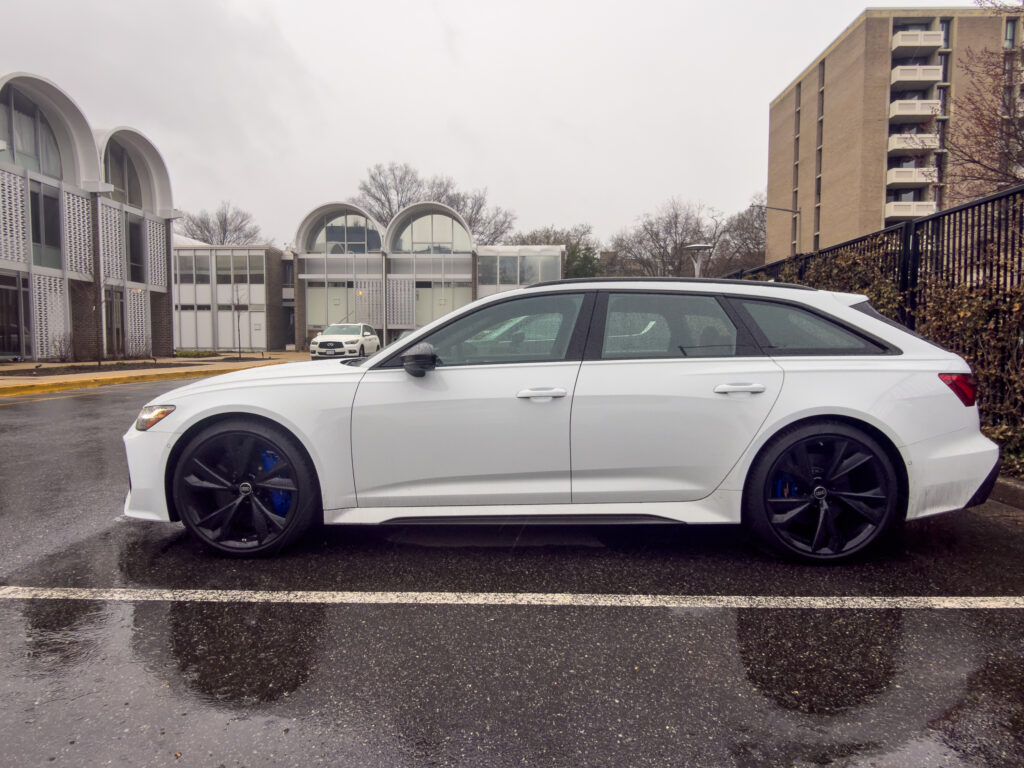
Note the flaming arches.
Jonathan Gitlin
Note the flaming arches.
Jonathan Gitlin
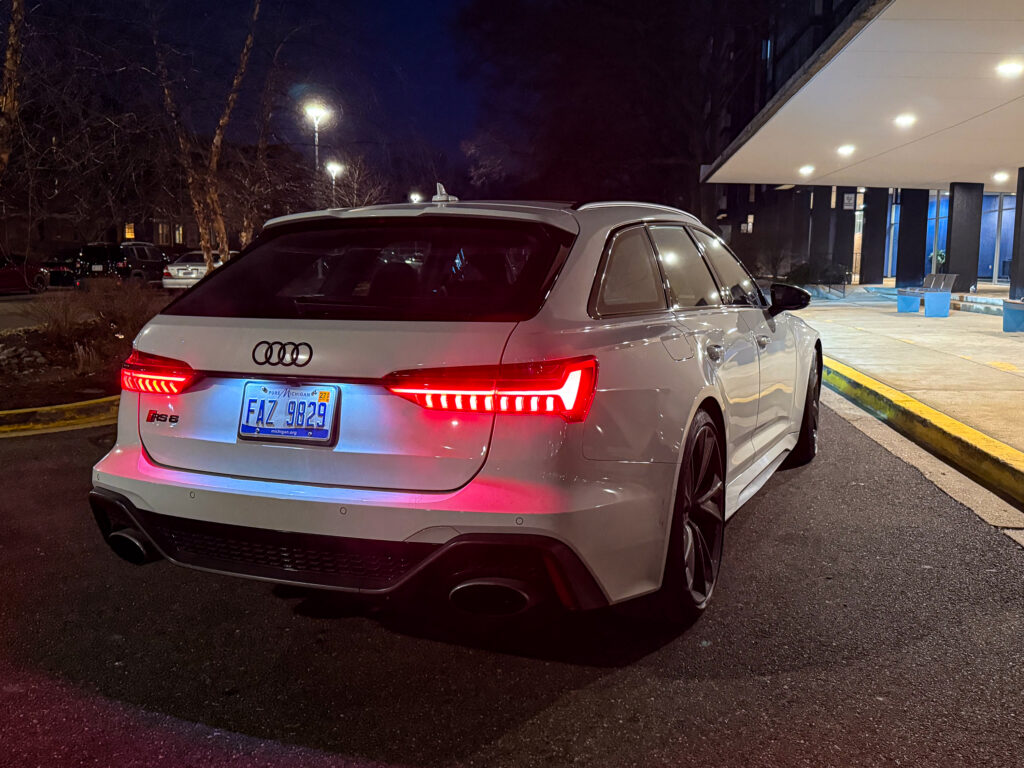
Even when you’re talking loud, the exhaust isn’t obnoxious.
Jonathan Gitlin
Even when you’re talking loud, the exhaust isn’t obnoxious.
Jonathan Gitlin
Note the flaming arches.
Jonathan Gitlin
Even when you’re talking loud, the exhaust isn’t obnoxious.
Jonathan Gitlin
It is, as you can imagine, rather fast. From a standstill to 60 mph, it takes just 3.3 seconds, just a tenth longer than the V10-powered Audi R8 which, like the RS6 Avant, is gone, heading off into its sunset in 2024. (Fans of indeed fast Audis need to be fully electric: the RS e-tron GT will do the same dash in 2.1 seconds, which even this angry writer still feels is extremely violent.)
The mechanics and electronics are all shared with another fast Audi that is also now out of production, the RS7, which might give you the impression that it’s similar to drive. Actually, it’s not. Even though both weigh around 4,900 lbs (2,222 kg), depending on options, and both have the same air suspension, the RS6 Avant manages to feel lighter than the RS7—it’s more eager to change direction. It also feels a little loose on the rear axle; like the last RS7 I drove, this RS6 Avant is equipped with a torque-vectoring rear differential, but the station wagon’s body shell means the center of the car is slightly higher and further back than the faster RS7.
That adds a measure of playfulness not always found in RS Audis, and less so in the company’s regular models. Forget taking the long way home—this is a car you’ll find an excuse to drive. In summer I’m sure there’s more grip, especially from the front axle, but even on winter tires, I’ve never come close to reaching the limit on public roads.
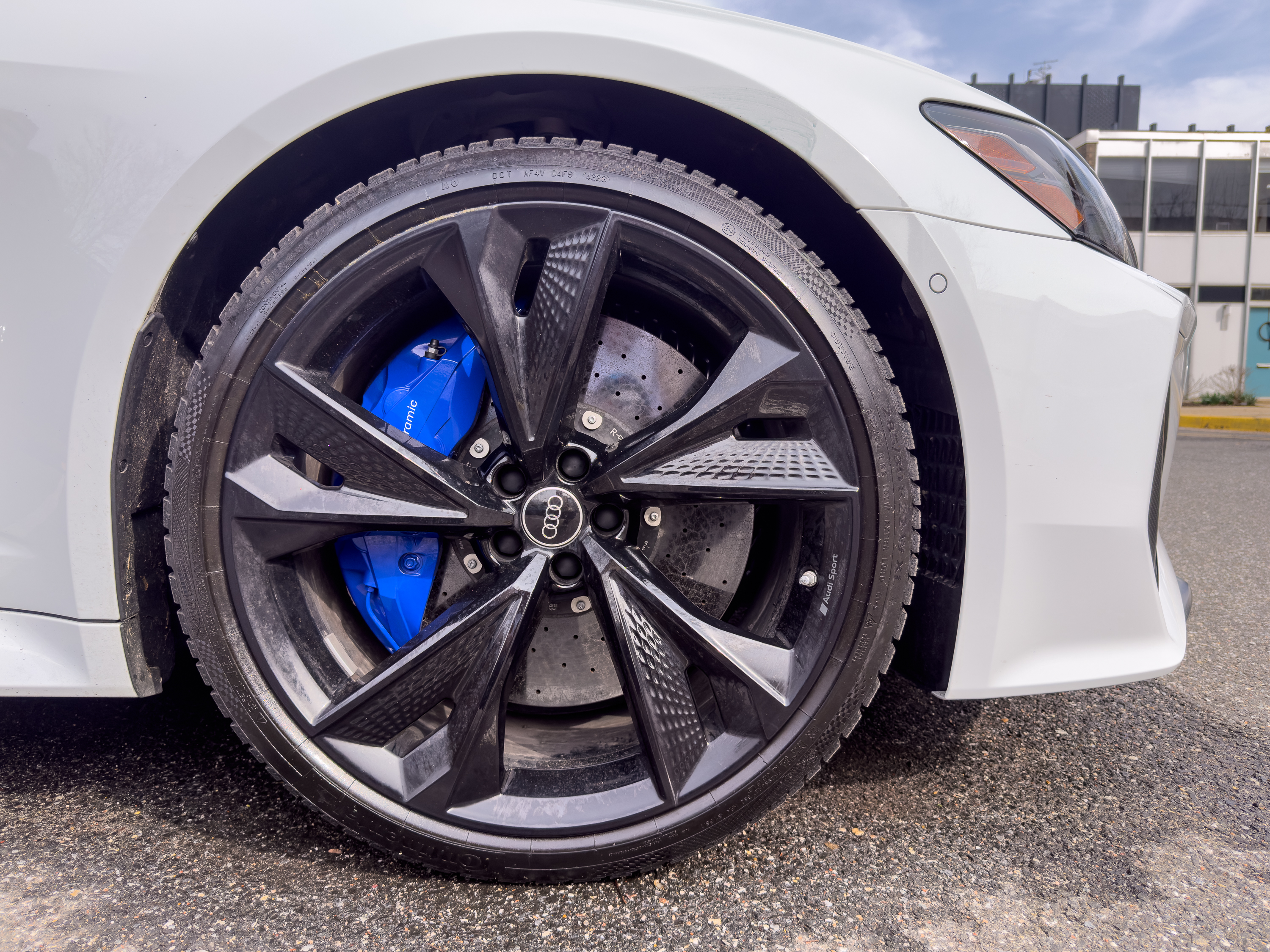
The 22-inch black wheels were part of the RS6 Avant, as were the blue brake calipers.
Credit: Jonathan Gitlin
The 22-inch black wheels were part of the RS6 Avant, as were the blue brake calipers.
Credit: Jonathan Gitlin
What I didn’t miss the last time I drove the RS6 Avant was how easy it is to drive slowly. I made a note of this, because that’s something I found very difficult to do in the latest Audi S5, for example. Here, the big white wagon was content to travel at 20 mph (30 km/h) or less, and in a comfortable setting you didn’t even hear the roar of the engine. With 30 cubic feet (850 L) of cargo volume with the rear seats in use and nearly double that (59.3 cubic feet/1,679 L) with the rear seats flat, there’s more than enough room for Costco runs and camping trips.


